Monday, October 10, 2016


EDC 532 (URI, Fall 2016)

Introducing the work of BRIAN STREET!
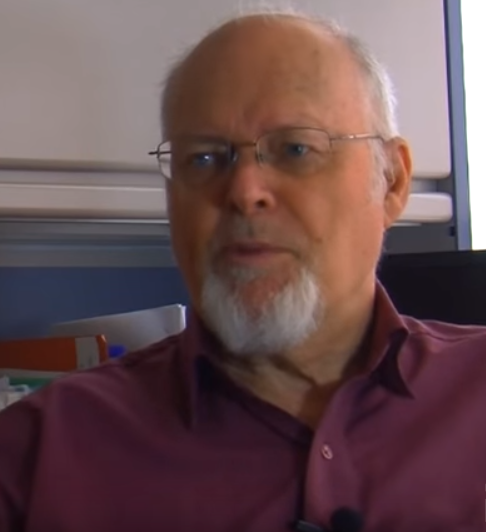
Brian Street's literacy research is a practice of humility.  Thus it's no surprise when he relates his adventure practice to students via the Global Conversations in Literacy Research program that he includes the Buddhist story of the Turtle and the Fish. Street comments on that  tale and explains that the premise of the story about the impossibility of the fish knowing about dry land is analogous to the impossibility of the methodologically armoured researcher knowing about the actual culture or form of literacy already present in front of them in a different (and assumed to be primitive and/or inferior culture).  https://www.youtube.com/watch?v=rFKPiGgNJ4E  


When he describes his ethnographic studies in India, Ethiopia and Uganda, he is keenly aware of how he literacy practice and research needs to be bi-directional in order for him to not replicate the methods and agenda of  other “literacy experts”.  He comes close to painting such experts as Promethean miracle workers who visit cultures that need to be “made literate”.   If I had to pick one word that would begin to encapsulate Street’s methodology and scope of his discoveries, it would likely be the word attunement.  The best illustration of that attunement is his own narrative on teaching literacy in India in his ethnographic study. The interaction that inaugurates that study is Street’s own request to be taught his own name and the name of his own locality, Brighton, in the Indian language whose context he studies.


So one could find much overlap in the methods Street uses and the work of Paulo Freire as the New London Group of scholars, to whom Street belongs, is known for advocating social justice as one of its defining characteristics.  


While critics of Street and his group members may frequently say he has a methodology but no conceptual framework, evidence can be found to support the notion that Street’s conceptual approach is about correctly naming literacy skills (or to use true names, to borrow a phrase from American fantasy and science fiction author Ursula K. Le Guin), not necessarily making them be principles or phenomenon that must therefore be found in the next round of research.      He does this in two ways.   


First, Street has made it a point of discovering or recognizing what he calls hidden literacies.  These are cultural cues, habits, and non-verbal, and unwritten behaviors that also carry a capacity for language fluency and literacy.     But when recognizing the nature of his work and his witty verbal demeanor these hidden literacies.  would probably be better to call them “hidden in plain site literacies” because of the preconceptions of researchers who tune out the apparently obvious distractions when seeking understanding.   Street’s approach clearly demonstrates how he is eager he is to invert that dominant methodology  and truly be attentive to the process of study by being taught by Indian women, examining the continued use of the three Ethiopian scripts (Latin, Amharic and Ethiopian) and the political prohibition of posting signage in Ugandan culture.   For Americans as a whole, the last decade or two seems to have opened up enough space in our cultural fabric to acknowledge these hidden literacies.  In popular culture that has happened with the film and the short lived television adaptation of Outsourced,  the story of an American call center manager Todd Dempsy/Tood Hamilton, who is relocated to India so that he can keep his job.   His interactions with his subordinates and neighbors reveal so many of these misunderstandings which are ultimately hidden literacies that would appear but trivial or primitive to the average North American.    The book American Veda: How Indian Spirituality Changed the World by Philip Goldberg has done much of the same work in helping readers explore the same theme and helps the otherwise skeptical Western thinker discover, oh, that seemingly odd or esoteric idea has been here with us in America and subtly changed us without our even knowing.  


His second practice and insight flows from the first.  Street stains out the over use of the word literacy itself as a catch all term because it has been used to include images and other nonverbal phenomenon.   He raises a pointed question on this topic:”Do we really want to reinforce the ominous implication-- already in the air-- that all intelligence and skill means correctness with letters and writing?” (Elbow)  So it appears that Street here again takes elitism to task and his thought seems to resonate with Howard Gardner’s multiple intelligence theory in that it does not limit intelligence to the linguistic and logical domains, reduced in scope even further by the expression of that intelligence in text.  
Finally, in a rather symmetrical fashion to his affirmation of the local language is his criticism of the agenda of a scholarly consensus that finds its formulation and universalizing adaptation through the community of scholars (who of course are mostly found in developing nations).   So he has also raised a number of vital questions on this topic.  
"What is the reality of international co-operation in literacy?"; Is internationalism damaging to local cultures? How can the local be protected and enhanced by approaches of national and international agencies to literacy? How can international co-operation be promoted in such a way as to sustain local identity?” (Street, 1993)


The questions acknowledge the power relationships of those who would define literacy based upon cultures that manifest hegemony already in terms of linguistic, cultural and international politics.   


I am a social-justice oriented Roman Catholic theology teacher.   I find Street’s approach to be holistic and humanistic (in line with the Catholic humanistic subfields of Benedictine humanism and Ignatian/Jesuit humanism).   His critical approach in either presented personally in webinar form or in print does not make power the only dynamic in literacy studies and therefore fall into Marxist excesses or other ideological traps.  He seeks to illuminate the ideologies that are already there for the service of all human beings whom he clearly holds as equals.  


References


@GCLR_GSU. "Brian Street-April 27, 2014." Global Conversations in Literacy Research. Global Conversations in Literacy Research: A Series of Web Seminars H, 29 Apr. 2014. Web. 10 Oct. 2016. <https://globalconversationsinliteracy.wordpress.com/past-webinars/upcoming-speakers-2013-2014/brian-street-april-2014/>.


Elbow, Peter. Vernacular Eloquence: What Speech Can Bring to Writing. Oxford: Oxford UP, 2012. 344. Print.


Kelder, Richard. "RETHINKING LITERACY STUDIES: FROM THE PAST TO THE PRESENT." Literacy.org. University of Pennsylvania, Graduate School of Education, 1996. Web. 10 Oct. 2016. <http://www.literacy.org/sites/literacy.org/files/publications/kelder_review_of_lit_studies_96.pdf+>.


Simbawonwon. "Outsourced Culture Shock." YouTube. YouTube, 16 Dec. 2014. Web. 10 Oct. 2016. <https://www.youtube.com/watch?v=hGKCkvNk_zI>.


Street, Brian V. "Autonomous and Ideological Models of Literacy:Approaches from New Literacy STudies." Media Anthropology Network. Media Anthropology Network, n.d. Web. 10 Oct. 2016. <http://www.philbu.net/media-anthropology/street_newliteracy.pdf>.


Street, Brian V. "Rethinking English in British Schools." Youtube.com. Facultih, 27 Nov. 2013. Web. 10 Oct. 2016. <https://www.youtube.com/watch?v=rLfyM0NWEDY>.


Street, Brian V. "What Do We Mean By "Local Literacies"?" Conference on Sustaining Local Literacies: People, Language and Powerh. Proc. of What Do We Mean By "Local Literacies"?, Reading, UK. 1993. 2h. ERIC: Institute of Education Sciences. US Government. Web. 10 Oct. 2016. <http://files.eric.ed.gov/fulltext/ED359842.pdf>.


Saturday, September 24, 2016

Strategic readers  (URI EDU532/Fall 2016)
In the last two weeks, the cognitive measure of strategic reader’s acquired target skills have stood out most in my mind.   I know this is starting backwards to consider what it means to be a  strategic reader.  But those targets from the NAEP Reading Framework have helped me to examine assumptions I’ve never had the courage to consider before.   In my current context I would say that we gear up students to be strategic test takers.   PSAT, SAT and other standardized test preparation is discussed and given some reasonable amount of time in order for our students to succeed.   It is the final exams, however, that are the perennial benchmarks of student recall skill and teacher accountability.   I have really yet to see a theology final exam that ever mirrors the Grade 8 or  the Grade 12 Cognitive Targets (p 9, NAEP) in its form and layout.  Ultimately, locating and recall, the lowest or most simple target is one that takes over an exam and does not mirror the 20% recommended expectation of that competency.    In our Moral Theology course this changes somewhat and moreso for our highest performing students, but I can only speculate that English final exams work their way toward more integrating, interpreting, evaluating and critiquing.   I don’t think cramming would be such an issue for high school students I see working now and the way college students still do the same.   A quantifiable number (a raw score) seems to take on it’s own mystical power as a measurement of “something” which must have been legitimate because it mirrored the content of the course (without considering what cognitive capacities we should have considered in the first place.)
I have found that identifying strategic readers and I guess this must mean strategic listeners also, is that they have this wonderful capacity Buehl lists in the comprehension process of proficient readers: making connections to prior knowledge.   I teach two grade levels normally, sophomores and juniors.  Yet the sophomore class is an honors class while the junior class is designated accelerated (unmentionably, the lower level).   It is with the proficient readers and/or listeners I find that I will have students throughout the year who effortlessly refer back to the very first week of class or the very first historical unit and verbalize a direct correction to prior knowledge.    On the accelerated level we teach foundational moral theology for about a half a school year and then applied issues (social justice, sexuality, life issues, war, crime, etc.).   For many in that level the first half of the year becomes a distant and unrelated set of propositions even though it was intended to serve as the common vocabulary and language for all of those succeeding issues.   And trust me, in light of it being a Morality course at a Catholic high school, there is really no other way to roll it out in terms of the institutional responsibilities we theology teachers have.    But returning to the theme of prior knowledge again, I find that with that same theme I can activate connections for students by modelling that behavior in real time (the first part of the reciprocal teaching process) by connecting our just war unit criteria to insights about the Vietnam War.   Faces look like flicked on light bulbs when that happens in class; it’s literal shock and awe to them that a teacher knows something “outside” of his or her discipline.
Connections
I find the the readings for the past two weeks have done much good on laying out the capacities for readers but also the social, cognitive and, pedagogical pitfalls associated with a changing landscape of literacy or an unchanging set of approaches in the classroom by teachers or unchecked assumptions by students about what the new technology landscape means for them as learners, whether actively engaged or actively resistant to the process.
When teaching literacies is time our friend or our enemy?   Duke and Pearson state that one of the key strengths of strategic readers is that spend  a great deal of time spent actually reading (p. 207).  I work in a high school that does not have an SSR portion of the day.  So it makes me wonder how to have students gain a passion or interest in reading (even online) when literature is already selected without options.    The five Common Core standards listed in Buehl’s article (p.9) certainly assume a great exposure to literature with cognitive expansion and mastery happening in a very ambitious set of outcomes.  One specifically states the question of a higher volume of informational expository texts is one of the desired learning outcomes.   If an agricultural system cannot be both resilient and efficient, it seems to me that these admirable objectives are both attempted, either the volume or the complexity or depth needed to get all of the skills necessary to be a strategic reader.
Of course, I understand that my perspective may be warped in this manner, in that I am thinking of my single year curriculum and not necessarily the whole of a system wide K-12 approach.  But I believe the authors, especially Buehl, Duke and Pearson, state that there is trade off in embedding literacy strategies into the curriculum because for most people those seem to be at cross purposes with the highly regimented and content rich curriculum scope and sequence we face for a new run through each September.
Despite those reservations and jumble of semi-cynical emotions, the CORI videos give me hope that the embedding of literacy strategies described in Duke and Pearsons work are attainable, but is that only the case for elementary grades?   High school students normally switch classrooms and the very setup of the curriculum segments and compartmentalizes the work to be done.   The Summer Institute’s book Schools 2.0 spoke of having year level questions and themes at the high school level.  Such a practice to me seems to increase the efficiency and the use of time when individual teachers are not side by side of each other reinventing the wheel (whether it be a projects or practices).  My experience with librarians at the high school level in two schools has been very positive, so when I consider access to materials as shown in the CORI videos I know some of those encounters and procedures are replicable in a high school setting but certainly not to the degree in which the teacher has fifty or sixty books available for a teacher to have on standby for what seems to be by the videos’ implication at least a few weeks.   To take another approach, I have attempted a number of webquests in my career which certainly contain the capacity for inquiry and give rise to a certain degree of creativity in product creation.
Implications/Questions
All of these readings have challenged me in terms of modifying the specific methodologies I employ in class, especially my moral theology course, because it is on one level already a media literacy course.   But it is not about the scope and sequence of the course but my consciousness has been raised so as to focus back on student needs.   If I give a cursory review in class of a text I assign for reading I now know that I’ve really not given my best to a student who struggles and cannot make connections and may not have the desire to point out his own confusion or frustration.  What then will I have accomplished if I don’t change my ways now?  Taking this course during the school year is such a double edged sword in terms of the effort needed to succeed at this and my job demands but the payout of integrating in real time and sharing new insights with my receptive department chair is a wonderful benefit.
The challenges of non-reading culture of boys is not sufficiently addressed in these readings. As a generally liberal citizen I still take much stock in the ideas presented by Christina Hoff Sommers  War On Boys  Prager University video (a Youtube channel I otherwise largely avoid) https://www.youtube.com/watch?v=OFpYj0E-yb4. Teaching in an all boys school and being the father of three sons I have a two-tiered experience of how many boys actively resist leisure or other types of reading.   Sommers also address that our cognitive and behavior labels now tend to skew toward rewarding the behavior of girls as more ideal readers and writers.  Again, as a liberal, I just want equal opportunity in this case.  

Monday, July 13, 2015

Final Project Post / Hey, I really feel renewed and empowered now!


I. The Project rubrics old and new.
II. The 1000ish word Blog.
III. The Self assessment.


I. My project rubric: This link.

II. Blog: Hey, I really feel renewed and empowered now!

Project Context
The Coolest Churchy Things in the World Project was something I created fifteen years ago.  When I think back now I understand how one dimensional it was in its primordial form.    Basically there were only three criteria from Michael Rose's work on church buildings: permanence, verticality and iconography. This link.   Each student created an individual Powerpoint and they each assessed three different churches.     Presenting them took forever and they were repetitive.


Up until last year the project has been multi-media in that it is now about the assessment of church architecture, iconography in itself and hymnody.   That makes for much more diversity and so does the fact that I have students examine multiple criteria of evaluation for these three domains before they settle on three they find most meaningful for their purposes.    As it's done it groups now it is much more efficient and still has academic rigor because each student has to create a 300 word analysis to accompany the slide they have completed.  (They don't read the whole analysis during presentation, only the highlights.)   Collaboration is now an important factor too as students use Google drive to share at our Google apps enabled school.


My Self-Understanding on the Techno-Educator Spectrum

I am firmly in the techno-constructivist role at my school in light of this and a few other projects I have my students complete.   I think that techno-constructivist-able is a better self-understanding in light of the fact the content rich curriculum of my department has its own inherent accountability structure that includes common final exams.  I could see myself balancing these two dynamics and reconciling them over a period of years by deciding how to make at least each unit of a course I teach contain one integrated social media/tech project while letting the balance of the work implementedin a more traditional manner.    So it is not only my own set of skills that makes me a techno-constructivist but also my relative position in my department in terms of structure of the curriculum and the varied positions of my colleagues.   Lastly, I think feedback from students to me and to the school wide academic surveys our school administers clearly puts me in the constructivist camp.    Students have highlighted this project when asked about technology  and have sometimes thanked me again for the opportunity a year after the fact when they see me in our department center.

Media Literacy Course Conceptual Correlates

Obviously a project based upon the Church emphasizes and reinforces certain philosophical-ideological elements of Grinner's SCWAAMP tool.   As for Christianity, I have designed the project to be inclusive of four major traditions when it comes to architecture: Roman Catholic, Eastern Orthodox, Anglican, and (European) Lutheran.  Yes, these are primarily white orientated locations but I do find that students are drawn first and foremost to cathedrals in South America and I do a little coaxing toward Orthodox communities for the sake of diversity. The Coptic Church, Ethiopian Church, and Melkite Church are certainly not white in terms of members.    Similarly, students are amazed to find out that the Basilique Notre-Dame de la Paix Yamoussoukro-Côte d'Ivoire This link.  is the largest Catholic Church in the world.  (Yes, but the current rector is Polish.)  La Sagrada Familia in Barcelona always wins one student's heart each year. This link.      Neither of these buildings is restrained as white American students may expect if their first vague notion of Cathedrals are English or American ones.   Similarly, I include articles about class consciousness in the resources for criteria such as the article Beauty is for the Poor This link   That article focuses on the purpose of the Church buildings that undermines individual property ownership and focuses on inclusivity and stewardship for church communities through time.
Image result for largest catholic church cote d'ivoire  Côte d'Ivoire La Sagrada Familia


As for groups that choose hymnody, at least one group a year chooses hymns to Mary, the Mother of God and this need not automatically reinforce the most conservative views of femininity. Rather it can be holistic when they choose hymns such as Timothy Dudley-Smith's Tell Out My Soul. This link. which is an English rendition of Mary's Magnificat prayer from the Gospel of Luke (1:52) (...He has cast down the mighty from their thrones...), etc.   But even if they don't go in a Marian themed direction students tend to quickly discover women have contributed greatly to the art of hymnody such as Fanny Crosby.
Fanny Crosby   Image result for timothy dudley smithDudley-Smith


And as for students work on the third category, iconography, they have similar experiences in finding Church art that is neither exclusively white or European in origin. It may be Maronite Icons from Lebanon or art from Christians in India.

Going forward students will complete this project using Pinterest and will have the opportunity to encounter these topics  in a deeper and broader way.   As such it has just only hit me now that the perfect prelude and postlude (that's musical Churchiness right there--postlude) would be for students to write a brief  "This I Believe statement" about the nature of the Church in the world both before and after the project. Therefore they can see their own growth in consciousness by comparing the statements.   Therefore, the project will have the Simon Sinek-stylecontinuum in the correct order:

  A) why(This I Believe), B) what (Churchy theme: hymns, art, architecture), C) how (Pinterest, Google forms, and class directions), back to D) why (This I Believe post project).    As for a fourth concept from the course it is certainly about gender identity.   Can sophomore honors students become appreciative of Pinterest?   For young cool dudes who are confident or semi-confident in their masculinity- is Pinterest the final frontier?

Not considered before this course...

Pretty much everything in the last paragraph would fall into the category of what I've not considered before for this project.   I certainly have in my practice numerous moments when I'm clearly stating the why of our class activities and discussions.  I also teach the morality course,  and I know it is literally impossible not to articulate the why and still be effective.  I come to realize my intentionality, which I normally take for granted as a theology teacher, is something I've assumed too much of when executing lessons and units of material and bringing them to their proper conclusions.

As I'm shifting from a Google slides presentation to a Pinterest matrix my consciousness has changed regarding the temporal nature of projects and products.   Google slide presentation mean students have a linear and finite benchmark to achieve. Students prepare, students present, grade is awarded and the project is DONE.  Time orientation with Pinterest will be open ended.  There are relevant items from the remainder of the course that they might add in for their own study purpose or general understanding about the Church or any related topic.     Philip Zimbardo has been doing the most interesting work on time orientation and how it effects our well being in the world.   This link.
When I couple Pinterest as a tool with Zimbardo' time orientation work, it helps me understand my own linear fixation when producing and fine tuning this project in the past.

Philip Zimbardo, Psychometric Superhero


 It's all open ended now.   I could keep this project in Unit 3:The Church Deepens its Prayer and Spirituality of our Church course.  If so, it will serve the function of letting students encounter the "hardware" of the church's prayer life.    If I move it to the introductory unit I'm now opening the possibility that it will raise student consciousness early on about even more fundamental issues of Church self-understanding such as the four marks of the Church: one, holy, catholic, and apostolic.    The catholic dimension of course is the one that is the inclusive and holistic understanding of the Church as the People of God across time and place but mysteriously together through the sacraments and the shared hearing and transmission of the Gospel (the mission of Catholic schools).


III. Self-Assessment:  This link


Wednesday, July 8, 2015

Monday, July 6, 2015

RE: The Flight From Conversation by S.Turkle and Anti-Teaching: Confronting the Crisis of Significance by M. Wesch


These articles are the most integral texts of our media literacy course so far in that they truly frame technological tools within the context of human communication and needs.   I've assembled key quotes at the beginning of my blog post and I'll be commenting on each of these ten items.

The Flight From Conversation by Sherry Turkle

1.  ...conversation for mere connection... 
2.   ...“alone together.”... 
3.  ...loyal to our own party. ... 
4. ...FACE-TO-FACE conversation unfolds slowly.  It teaches patience...
5.  ...that we reveal ourselves to one another.... -- communion requires vulnerability
6.  ...Indeed our new devices have turned being alone into a problem that can be solved... Vanier

 Anti-Teaching: Confronting the Crisis of Significance by Michael Wesch
7. ...We are all cut out for learning...

8....Tests often measure little more than how well they can recite what they have been told... 

9....Oftentimes the answer to a good question is irrelevant – the question is an insight in itself. The only answer to the best questions is another good question. And so the best questions send students on rich and meaningful lifelong quests, question after question after question....

10....Meaning and significance are assured only when our learning fits in with a grand narrative that motivates and guides us...

TURKLE: 

From earlier posts, I've made it clear I want to integrate theological insights with the materials we're encountering in this media literacy course.  Turkle addresses this problem of the substitution of conversation with mere connection.   Another way this can be expressed is communion having been replaced by proximity.   It happens with us smartphone users but it also happens with our institutions. If you ever find yourself in Middleboro Ma and I'm sure it's true across the nation, you can find a spot where you can literally see various denominations right in a row.  The X spot below is one of those places where communion (having members of churches  be "at one") is substituted with proximity.   Old time Taunton Ma, had it when there were five ethnic Catholic parishes within 1.7 miles of each other.

T
Turkle's phrase "alone together" concisely identifies this human spiritual problem at it's core.  We've gone a step beyond co-existence to by-existence as there is no "co" in the mental configuration.   The individualism she describes is a new frontier in human relations that has never before been possible without the advent of such technologies and the prerequisite of wealth, which together philosopher Albert Borgmann would identify as "advanced poverty".  

Turkle takes it a step further by noting that not only is this an inner world of myopia, but such a self-serving one when states that we are now in this state "loyal only to our own party."  If we happen to include anyone else in our cohort, race, gender or any other commality in this group we might be better off in navigating this world.   I've taught an ethics course for at least eight years and I have found this to be the most striking feature of adolescent moral reasoning: unilateral libertarianism.   "My group  (or I personally) can do this act but that out group cannot." My main  fear in encountering this attitude is not that it exists in adolescents but in adults of all ages.      Turkle's decoding of the power of FACE-TO-FACE interaction is so crucial to the essential mutuality and equality that is one of our deepest desires.    

The last two quotes I've chosen from the article are about personal revelation and problem solving when she addresses the continuum of intimacy and loneliness.     Her writing is almost a symmetrical counterpart to the insights about our humanity in the Jean Vanier's Becoming Human.   He begins his book about the nature of loneliness and assesses it in a much more favorable light.  From chapter 1:

Loneliness in one form is, in fact, essential to our humanity. Loneliness can become a source of creative energy, the energy that drives us down new paths to create new things or to seek more truth and justice in the  world...artists, poets, mystics, prophets...Frequently, it is the lonely man or woman who revolts against injustice  and seeks new ways. It is as if a fire is burning within them, a fire fuelled by loneliness. Loneliness is the  fundamental force that urges mystics to a deeper union with God.
This is in such a sharp contrast to the idea that loneliness is a mere problem to either be solved or avoided.    In the same vein, Turkle recognizes how we reveal ourselves in our uniqueness, our idiosyncrasies and even unintentionally.   All of this can be translated to meet Vanier's other insight that in order for us to have true communion, we must be vulnerable.   


WESCH:

 The first quote I chose "we are all cut out for learning" is something I've tried to bring to my students for us to wrestle with.      I've shown them articles about a young woman with Downs Syndrome achieving an associates degree with honors and the Batman feature of This American Life (program 544)  that showcases a blind man who can navigate the world by echolocation.  And so we see all of this vibrancy of life and willingness to face a challenge but in the classroom I still get the "will this be on the test" question as every other teacher does.  

I try as Wesch has to deal with the questions as much as I can and have used excerpts from the book "The Death of Why"  by Andrea Batista Schlesinger.    Of course asking deep questions is natural to a theology class but it is not something students necessarily feel empowered to do or ever get the opportunity to do.     I think we have ratchet up the diagnosis on this front: getting answers (easy or hard, simple or complex, clear or nuanced) are symptoms of an addictive disorder about being right or correct all the time.   Teachers in the humanities (including theology) are those most likely to suffer from this disease.  

But as for recover from either rightness or meaninglessness Wesch is right in that we have to identify and/or construct  a grand personal narrative to our course materials so that students can own them.  I've tried to do this in the last two years with my honors course on the Church.   The very first day I introduce students to the three styles of doing theology as formulated by Gerry O'Collins, SJ: walking (praxis/faith in action), kneeling (prayer) and sitting (study).   As the conversation unfolds, I try to make the concepts become relevant to the student's lives but after reading Wesch it is clear to me that students must articulate that already have an unfolding narrative, of action, and of prayer, and of study in their own lives and they need to name those narratives in whatever primordial or developed form they are in and to hear the stories of others with co-lateral stories.   Then, on a more deeper level of trust can we move forward as a group of disciples (learners).


Wednesday, July 1, 2015

Introduction to Rethinking Popular Culture and Media


I have mixed feelings about the scope of Elizabeth Marshall and
Özlem Sensoy's introduction to Rethinking Popular Culture and Media.   If I want to locate the tension as a set of processes within myself, I can do that.   My religious identity and divinity education both lead me to accept a degree of acculturation by individuals and groups with traditional life orientation. At the same time  I want to resist having  modern or post-modern secular pre-suppositions order the narrative and set of priorities in such a manner as to find solutions that minimize the collective wisdom of narratives, institutions and communities that have been around much longer than the modern American-German hybrid research university model and its acceptable set of answers.  

If t ambivalent message in that there is a post-modern approach that leaves certain dimensions of life off of the table or at least does not bring them to the forefront of the discussion on how to have a critical method in Malala  

In light of my concerns examining he five point plan of the book that the authors introduce as a method of inquiry and action is necessary.  

Part 1: Study the Relationship Among Corporations, Youth, and Schooling

Who can argue with this foundational strategy?   I can only do it by expanding the scope of the study even though it does risk making a bit of an intellectual maze.   Why only corporations, youth and schooling?     Why not family structure and mediating institutions (churches, labor unions, NGO's, Boys and Girls clubs) also?   Corporations today hope to brand, that is own, the young person in her or his environment.  How is the young person, though vulnerable, still in many cases empowered?   How is it that Malala exists?   What positive and negative movements of mediating institutions and other local groupings have contributed to a young woman having such a profound sense of self that she can resist such cultural forces?   Isn't it a reduction to start only with three different stakeholders: students themselves, the school/education process and corporate players in a world that is much more complex than  those three dimensions?  

Their identification of the problem is stated in a rather critically detached manner that identifies the problem.  And what a problem it is.   The corporate influence is already so entrenched in public education in North America we take it as a natural order of being.  if our 99 state legislatures are beholden also to these same powers we must identify the stranglehold as opposed to identifying this as a profound crisis that indicates rapid cultural decay.  

Part 3: Examine Race, Class, Gender, Sexuality and Social Histories in Popular Culture and Media

 By all means!  But does this not call for an immediate identification of exclusion and naming how disordered and inverted society is?  Critical questions should be asked and students should be encouraged to think on their own but is it not pressing that shaking things up in perception  is a way that initiates work on  what they set up as part five Take Action for a Just Society?    

Inversion is necessary immediately.  We don't see things until they are turned upside down.   Betty Edwards tells us we can't really draw Igor Stravinsky until we see him upside down  http://everydayadrawing.com/2013/01/31/drawing-picasso-igor-stravinsky-upside-down/.


Jean Vanier, founder of L'Arche, tells us through his fifty years of experience that we must see the weak (mentally disabled, physically disabled) for what they are and come to be in vulnerable communion with them to actually understand them and ourselves as actually weak and vulnerable persons who live under the reciprocally deterministic illusions of our continual power, competence, and independence.   http://www.barnesandnoble.com/w/becoming-human-jean-vanier/1100191764?ean=9780809145874

A recent feature on This American Life has recently done same to help us be open to inversion when the lie is named and unpacked, for instance "blind people can't do those sorts of things"  http://www.thisamericanlife.org/radio-archives/episode/544/batman 

And finally,  let inversion recast our whole culture.   Recall Horace Mitchell Miner's Body Ritual Among the Nacirema.   http://www.ohio.edu/people/thompsoc/Body.html   New pieces like this need to be written so as to expose our collective narcissism which the English understand that when either culture or counterculture takes place on this side of the Atlantic, it is Americans who continually take themselves too seriously.   

I know I probably am more on the same page as these two authors than I admit here but this approach has certainly been more adrenaline filled and helped me to survive to post at 11:12PM local time.


Disney culture and personal history

What is your relationship to Disney and animated children’s culture?  I had to look at a list of Disney movies from my childhood to regain my bearing.   The VCR didn't arrive in our house until I was somewhere between ten and twelve years of age.   So the only access to Disney films of the time was an occasional presentation on network or local television or one of the many live action films Disney produced.  Many of these titles were demonstrating an evolution to empower girls and women at least in that girls were the leads.  Jodie Foster and the Richards sisters got numerous appearances in those days. 

As for animated children's television most reruns of comedic shorts such as Yogi Bear, and Tom and Jerry along with the numerous super hero cartoons such as the SuperFriends and Anime imports of the time were my mainstays.   I can now see how they may have contributed greatly to my benevolent sexism score of 2.73 out of 5.     (My hostile sexism score is much lower.) http://www.understandingprejudice.org/asi/    So the knight in shining armor attitude is one I've learned well but I'm not a leading man.

The superhero script especially would have numerous white male protagonists who were strong if not invulnerable or who could otherwise remediate any lack or setback in roughly nineteen minutes before the climax of the story around 22:00.   

I was a little too young to watch more than a few episodes of the live action Wonder Woman with Linda Carter.   I am glad Jill Lepore's new book has helped us understand this crucial American characters more thoroughly in her recent book.  http://www.amazon.com/The-Secret-History-Wonder-Woman/dp/0385354045
  
What role did these texts play in your life as a child, if any? 

 I'm an Anglophile who loves the lore of the monarchy and royalty but my class awareness from early on in my life made me see the prince/princess dyad as something I would not be much at peace with or appropriate for my own story.   I would be the stable boy or some other hired hand who would find another of the same station in life. 
 
How do your memories challenge or reflect Christensen’s claims? 

The cultural story is alive and well and the prom sub-culture of high school.   When I was a younger teacher I was amazed that the prom king and queen were chosen at random (during the prom) at my first high school of employment. 

How does Brave meet or challenge your memories of princess culture?

The names are a key insight for me.   Fergus, Elinor and Merida are all names that are strong.   We truly have a protagonist, deuteragonist, and tritagonist.   Fergus means manly, Elinor means shining light and Merida means high place of honor.